The internet made it easy to connect with people. Yet broken relationships surround us.
WhatsApp launched around 2009-2010. It made connecting across oceans cheap and frictionless. Similar apps followed. Barriers to human interaction fell away. Saying “hi” to anyone anywhere costs nothing now.
But here’s the real problem: Will they say “hi” back?
Dependability Is a Basic Human Need
When a friend replies to your message consistently, a bond forms. Everyone needs to depend on someone. This is basic.
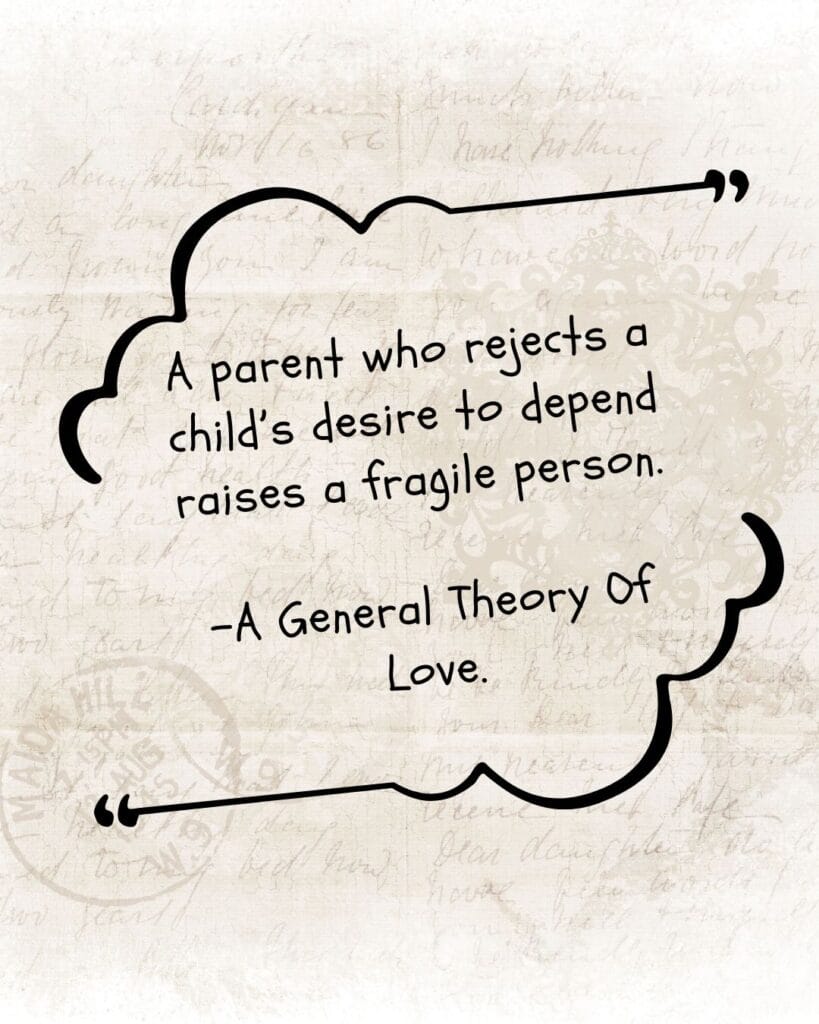
Dr. Amir Levine and Rachel Heller call this the Dependency Paradox. The more we can depend on each other, the more independent and daring we become. When someone rejects our need for them, we don’t grow stronger. We become anxious. We lose the secure foundation we need to face the world.
Dr. Sue Johnson, founder of Emotionally Focused Therapy, agrees:
“Insecure attachment creates a ‘neural alarm’ in the brain. When we cannot lean on our partner, our brain sees it as a threat to survival. This causes emotional volatility and fragility.”
John Bowlby, the father of Attachment Theory, identified something he called “Compulsive Self-Reliance.”
When someone repeatedly rejects your need for connection, you may look strong. You stop asking for help. But Bowlby found this is a fragile mask. Without emotional support, you’re prone to sudden breakdowns, depression, and physical illness. You’re not truly strong. You’re just unsupported.
The internet gave us channels to connect. But the desire to connect deeply and consistently? That lives inside us.
The Internet Gave Us Connectivity but Took Away Dependability
We face a double problem.
Our virtual connections are easy but emotionally unreliable. Meanwhile, when we’re physically together, our phones distract us. We abandon the old way of connecting—physical presence, shared emotion, vulnerability.
Our loved ones don’t get our attention. Our devices do.
Digital connectivity made information exchange easy. But it killed attunement—the choice to stop, listen, and help someone regulate their emotions.
Our Relationships Are in Our Hands
The need to depend on others is fundamental.
When someone reaches out and hits a digital wall or finds you “connected but unavailable,” they feel the injury. They learn their needs are “too much” or “unwelcome.” This builds brittle, fragile self-reliance.
No amount of high-speed internet replaces this simple human choice: “I am here. You can lean on me. I will not push you away for needing me.”
The internet provides the channel. But the content—accepting someone’s need for you—remains a vulnerable human choice. If we use our hands to prioritize screens over the people reaching for us, we raise a generation of fragile people. They’ll have 1,000 friends but no one to depend on.
Our virtual connections are easy but emotionally unreliable. Meanwhile, when we’re physically together, our phones distract us. We abandon the old way of connecting—physical presence, shared emotion, vulnerability.
Our loved ones don’t get our attention. Our devices do.
Digital connectivity made information exchange easy. But it killed attunement—the choice to stop, listen, and help someone regulate their emotions.
True. Liked most
Thanks a lot Kaka.
“The need to depend on others is fundamental.”
“The more we can depend on each other, the more independent and daring we become”
Amazing lines and so true….
As a well being and psychological counselor I agree to this at a 💯….
Emotionally dependency with emotional reciprocation is important and a basic human need…..
Amazing write up 👍
Absolutely. Simple things which I feel we are forgetting. Glad that it resonated with you. Thanks for the comment.
“Dada, you’ve hit the nail on the head! This ‘brittle, fragile self-reliance’ you speak of is everywhere. It’s truly disheartening to see how we prioritize screens over the outstretched hands of those who need us.
You’ve captured the core truth: no amount of digital connection can replace the simple human promise, ‘I am here. You can lean on me.’ That’s the real content we’re missing. We’re indeed raising a generation with a thousand virtual friends but no real anchors. A powerful, much-needed wake-up call, Doctor!”
Thanks for your response. Hope there happen conversations around these issues.
O’ that’s so true , internet provides just the channel and not the true connection. Human emotions would always respond and stir up with physical presence like nothing else and even the sound works so well when you are away from your loved ones. So there’s nothing like being old school here, it’s like realising the fact over and again that essence of life lies in emotional vulnerability
So beautifully penned down !
Thanks a lot. Glad that you liked it. There have been actually systematic comparisons of channels of communication and their emotional impacts. Strongest is physical presence then Video calls and audio calls and finally text messages.
Excellent write up 👌👌👌
Thanks a lot.
A beautiful write up indeed.
Since the times of writing letters we have always been awaiting the response back and somewhere deep we always felt the pain if we don’t get the reply so even today it’s human nature for dependability rather than connectivity.
Indeed very beautifully captured in words 👌👌
Thank you so much for your comment. Indeed we have to keep reminding ourselves that internet is a tool and we have to use it for our betterment rather than the other way around.
Disagree…Internet / AI is going to be our new dependability..more knowledgable than anyone..stable with no mood swings..loyal without any risks..entertainer like an Orchestra walking around..problem solver in minutes..Well informed like no one else..It will have Warmth of Grandma, Wisdom of Father, Fun like siblings..Loyalty of a friend, Romantic like a Gulfy..It wont be able to replace Mother tho..No one on this Earth can replace Mother for sure..
Thanks. I appreciate the point of view. But I won’t dwell into the futuristic possibilities. In the present and near future, AI seems to lack the capacity to form an emotional bond. Let’s see what future holds for the humanity.
What a superb write-up. It touches something ancient in us.
For most of human history, survival depended on one question….. Would someone come when called?
The internet changed the signal, not the expectation.
The social contract was never about access. It was about response.
Connectivity without dependability isn’t progress. It is a quiet breach of the oldest human agreement:- I will be there when you need me.
If you’ve read social contract theory, you’ll recognize this immediately…..it’s fascinating how an old philosophical idea finds such a precise echo in our digital lives.
Thank you so much for your comment. This actually summarises my thought so well. 🙏🏻